What is USG for Thyroid Nodules?
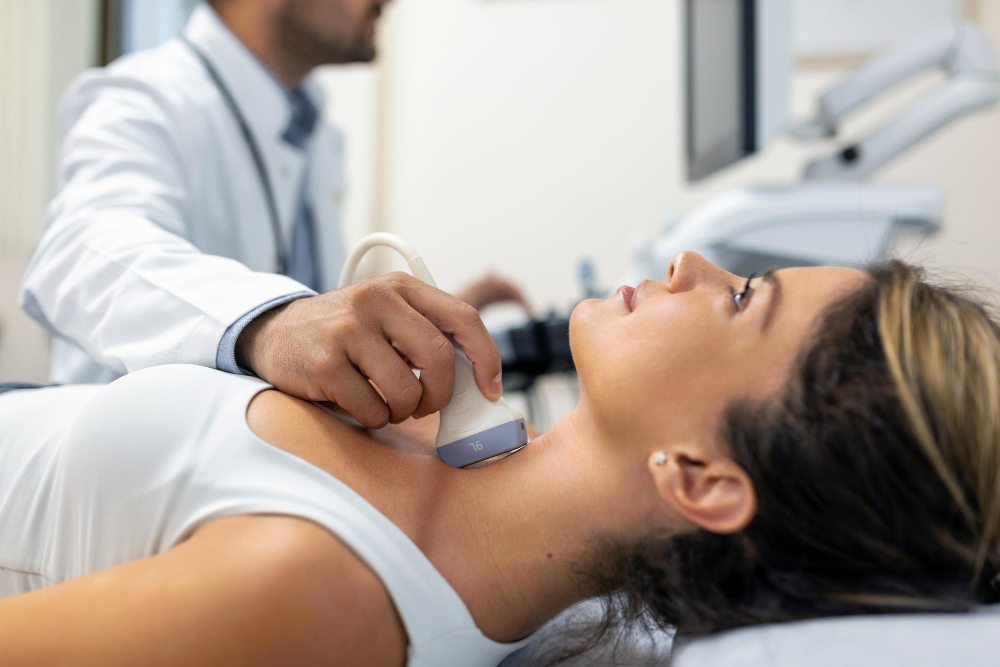
USG for thyroid nodules is a safe and painless test. USG stands for ultrasound sonography. It uses sound waves to create pictures of the thyroid gland in your neck. Doctors use this test to check for lumps, called nodules, in the thyroid. Often, USG for thyroid nodules helps find out if a lump is solid or filled with fluid. This test is also known as an ultrasound for thyroid nodules or thyroid ultrasound.
Why is USG Recommended for Thyroid Nodules?
Doctors often suggest USG for thyroid nodules for several reasons. First, it helps them see the size and shape of any lumps. Second, it can show if the nodule is likely to be harmless or needs more tests. In many cases, USG helps guide a needle if a sample is needed. Because it is safe and does not use radiation, USG is the first choice for thyroid nodule diagnosis.
How is the USG Procedure Performed?
The USG procedure for thyroid is simple and quick. Here is what usually happens:
Most USG tests take about 15 to 30 minutes. You can talk to the staff if you feel nervous. They will explain each step.
What to Expect During and After the Test
During the thyroid USG, you may feel the probe moving on your neck. However, the test does not hurt. The gel might feel cold at first. After the test, the gel is wiped off. You can return to your normal activities right away. Usually, there are no side effects. Your doctor will review the results and discuss them with you. Sometimes, you may need more tests if the USG finds something unusual.
Benefits and Limitations of USG for Thyroid Nodules
USG for thyroid nodules offers many benefits. For example, it is safe, painless, and does not use radiation. It gives clear images of the thyroid and any nodules. Also, it helps doctors decide if a nodule needs more tests. However, there are some limitations. USG cannot always tell if a nodule is cancerous. Sometimes, a biopsy or other tests are needed. Still, USG is a key tool for thyroid nodule diagnosis.
How to Prepare for a Thyroid USG
Preparing for a thyroid USG is easy. In most cases, you do not need to fast or stop any medicines. However, you should wear a loose shirt or top with an open neck. This makes it easier for the doctor to reach your neck. If you have questions, ask your healthcare provider before the test. They can give you special instructions if needed.
Frequently Asked Questions (FAQ)
When to Consult a Doctor
If you notice a lump in your neck or have trouble swallowing, talk to your doctor. Also, if you have a family history of thyroid problems, regular check-ups are important. Early testing with USG for thyroid nodules can help find issues sooner. If you have questions about the test or your results, your doctor is the best person to guide you.
Conclusion
A thyroid nodule can be concerning, but most thyroid nodules are harmless. USG of the thyroid is a simple, painless, and radiation-free test that helps doctors assess the size, structure, and characteristics of nodules and decide whether further evaluation is needed. If you notice a neck lump, difficulty swallowing, or voice changes, timely evaluation can provide clarity and guide the right next step.
Concerned about a thyroid lump or nodule? Consult Yashwant Chavan for expert evaluation and personalized guidance with the right diagnostic approach.