

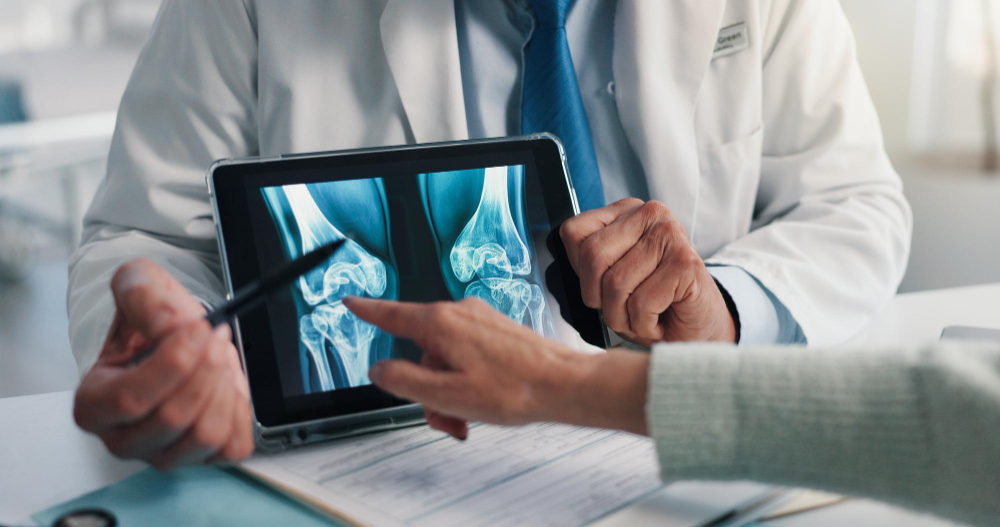
If you have knee pain, your doctor may suggest an MRI for knee injuries. An MRI, or Magnetic Resonance Imaging, is a safe scan that helps doctors see inside your knee. This test gives clear pictures of bones, muscles, and soft tissues. Because of this, MRI scans are very useful for finding the cause of knee pain. In this blog, you will learn what an MRI is, how it helps with knee injuries, and what you can expect during the process.
What is an MRI?
First, let’s understand what an MRI is. MRI stands for Magnetic Resonance Imaging. It uses strong magnets and radio waves to create detailed images of your body. Unlike X-rays, MRI does not use harmful radiation. Instead, it gives clear pictures of soft tissues, such as muscles, ligaments, and cartilage. For knee injuries, MRI scans help doctors see problems that may not show up on regular X-rays.
Common Knee Injuries Diagnosed by MRI
Doctors often use MRI scans for knee pain when they need more information. Some common knee injuries that an MRI can help diagnose include:
Because MRI scans show soft tissues clearly, they help doctors find the exact problem in your knee.
How MRI Helps in Knee Injury Diagnosis
Moreover, MRI scans for knee pain provide detailed images from different angles. This helps doctors spot even small injuries. For example, if you have a torn ligament, an MRI can show how bad the tear is. In addition, MRI scans help doctors plan the best treatment for your knee injury. Sometimes, they can even help avoid surgery by showing that rest or therapy is enough.
What to Expect During an MRI for Knee Injuries
Many people feel nervous before their first MRI. However, the procedure is simple and safe. Here’s what usually happens during a knee MRI:
Although the MRI machine can be noisy, the test does not hurt. If you feel worried, let the staff know. They can help you feel more comfortable.
Benefits and Limitations of MRI for Knee Injuries
There are many benefits to using MRI for knee injuries. For instance, MRI scans:
However, there are some limitations as well. For example, MRI scans can be expensive. Also, some people feel uncomfortable in the small space of the MRI machine. In rare cases, people with certain metal implants cannot have an MRI. Despite these limits, MRI remains one of the best tools for knee injury diagnosis.
Preparing for Your Knee MRI: Tips and Guidance
To make your knee MRI easier, follow these tips:
By preparing ahead, you can help the scan go smoothly and get the best results.
Frequently Asked Questions about Knee MRI
Conclusion
MRI for knee injuries is a safe and helpful way to find the cause of knee pain. It gives clear images that help doctors choose the best treatment. If you have questions or concerns, consult Dr. Yashwant Chavan for personalized advice about knee injuries and MRI scans.