

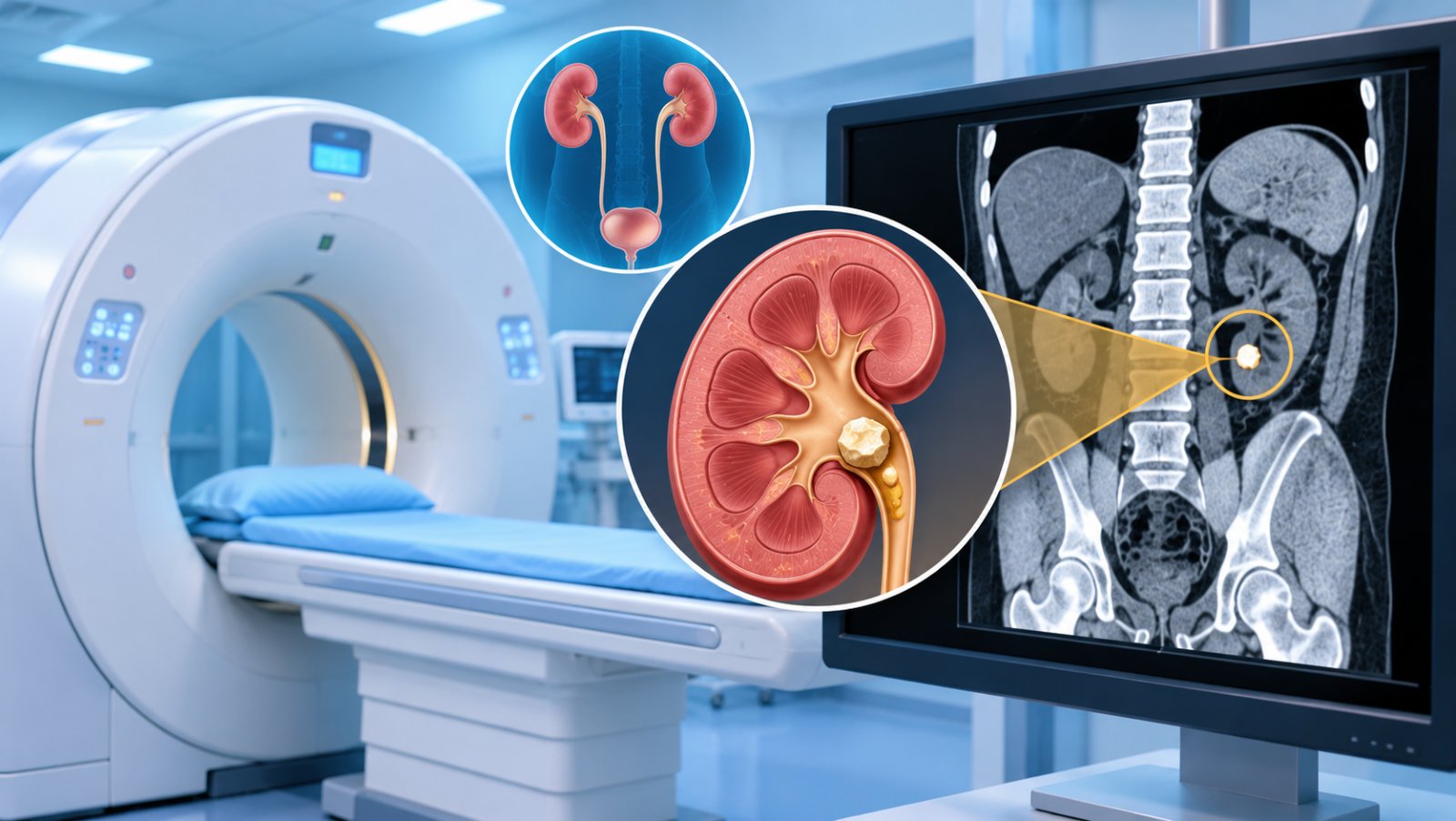
A CT KUB scan is a special type of X-ray that takes detailed pictures of your kidneys, ureters, and bladder. Doctors often use a CT KUB scan for kidney stones because it is fast and accurate. If you have pain or symptoms of kidney stones, your doctor may suggest this scan. In this blog, you will learn how a CT KUB scan helps in detecting kidney stones and what to expect during the process.
What Is a CT KUB Scan?
First, let’s break down the name. CT stands for Computed Tomography. KUB stands for Kidneys, Ureters, and Bladder. So, a CT KUB scan is a special test that uses X-rays and a computer to make clear images of these organs. Unlike regular X-rays, a CT scan takes many pictures from different angles. Then, a computer puts these images together to give a detailed view. This helps doctors see inside your body without surgery.
Why Is a CT KUB Scan Used for Kidney Stones?
Doctors often choose a CT KUB scan for kidney stones because it is very good at finding even small stones. Sometimes, other tests like ultrasound or plain X-rays might miss tiny stones or stones hidden by body parts. However, a CT KUB scan can spot almost all types of kidney stones. In addition, this scan works quickly and gives results fast. This helps doctors decide on the best treatment right away. For these reasons, detecting kidney stones with a CT scan is now common in many hospitals.
How Does a CT KUB Scan Detect Kidney Stones?
During a CT KUB scan, the machine takes many pictures of your kidneys, ureters, and bladder. Because kidney stones are hard, they show up clearly on these images. As a result, the scan can reveal:
With this information, doctors can plan the right treatment for you. For example, knowing the size helps decide if a stone can pass on its own or needs removal.
What to Expect During a CT KUB Scan
Many people feel nervous before a scan. However, the CT scan procedure for kidney stones is simple and painless. Here is what usually happens:
During the scan, you will lie on a table that slides into the CT machine. The machine will move around you, but it does not touch you. You may hear some whirring sounds. The scan usually takes less than 10 minutes. Afterward, you can go home and return to normal activities.
Benefits and Risks of CT KUB Scans
CT KUB scans offer many benefits for people with suspected kidney stones:
However, there are some risks to consider. Most importantly, CT scans use a small amount of radiation. While this is usually safe, doctors only recommend the scan when needed. In rare cases, people may feel anxious in the machine. If you have concerns, talk to your doctor before the scan.
Interpreting CT KUB Scan Results
After your scan, a radiologist (a doctor who reads scans) will look at the images. Then, they write a report for your doctor. The report will say if kidney stones are present, where they are, and how big they are. It may also mention if there are any other problems in your kidneys, ureters, or bladder. Your doctor will explain what the results mean for your health and discuss treatment options if stones are found.